Key Takeaways
- Set your inversion table to a shallow 20 to 30 degree angle for your first sessions, then progress toward 60 degrees only as your body adapts.
- A small controlled study of patients awaiting lumbar disc surgery found that adding inversion traction to routine physiotherapy reduced the need for surgery, though researchers note the evidence base for inversion therapy overall is still limited.
- Inversion therapy is not safe for everyone. People with high blood pressure, heart disease, glaucoma, or a history of stroke should talk to a doctor before trying it.
Introduction
Herniated discs can make even the most mundane tasks painful. They can make you dread simple things like lifting a box, opening a door, or just sitting down. Since surgery is typically viewed as a last resort, it’s worth exploring conservative options first.
In this guide, we cover exactly how to use an inversion table for a herniated disc, what the research actually shows about it, how long and how often to invert, and who should steer clear of the technique altogether.
What Is a Herniated Disc?
A herniated disc, sometimes called a slipped or ruptured disc, happens when the soft, gel-like center of a spinal disc pushes through a tear in its tougher outer layer. That bulging material can press on nearby nerves, which is what produces the sharp or radiating pain many people associate with the condition.
Herniated discs most commonly occur in the lower back (lumbar spine), though they can also affect the neck. Symptoms range from a dull ache to shooting pain, numbness, or weakness that travels down an arm or leg, depending on which nerve is affected.
Not every herniated disc causes noticeable symptoms. Some show up incidentally on imaging done for an unrelated reason, while others produce pain severe enough to limit walking, sitting, or sleeping. Age-related wear, repetitive lifting, and sudden strain are all common contributors, which is why the condition shows up across a wide range of ages rather than only in older adults.

What Is Inversion Therapy?
Herniated discs exert extra stress on the nerves running through your spine. Inversion therapy works by decompressing the spine, temporarily relieving that pressure while also stretching the muscles and soft tissue surrounding it.
The practice itself isn’t new. Inversion therapy, also called spinal traction, has been used for centuries as a way to relieve back and spine pain by tilting or fully inverting the body, sometimes up to 90 degrees. Done correctly and with medical clearance, it may ease some of the discomfort caused by a herniated disc.
Choosing the Right Table
The best inversion tables are the ones that fit your specific needs, so talk to your doctor before buying one. You want a table that eases your pain without straining your budget, and one rated to support your height and weight safely.
Does Inversion Therapy Actually Work for a Herniated Disc?
The research on inversion therapy is mixed, and it’s worth being upfront about that. A controlled study of 24 patients on the waiting list for lumbar disc surgery found that those who added inversion traction to their routine physiotherapy needed surgery significantly less often than those who received physiotherapy alone, according to research published and indexed on PubMed.
That said, larger reviews of the evidence have found the results inconsistent from study to study, and researchers generally agree that more high-quality trials are needed before inversion therapy can be called a proven treatment on its own. In practice, most clinicians view it as one tool among several, not a standalone cure.
Within about 10 seconds of inverting, many people report their pain beginning to ease, likely because the increased space between vertebrae takes some pressure off the compressed nerve. Whether that relief holds up over the following weeks varies a lot from person to person.
How to Use an Inversion Table for a Herniated Disc
Here’s the step-by-step process for using your table safely once your doctor has cleared you to try it.
1. Set It Up Correctly
Most tables arrive pre-assembled. You’ll just need to secure the pivots, straps, and joints so everything is locked in place before you use it. Check your owner’s manual for model-specific directions.
Next, use the height adjustment tubes on the side of the table to calibrate it to your height. You’ve got it right when the table balances horizontally with you on it and inverts in one smooth, steady motion rather than tipping unevenly.
Finally, set a starting recline angle. Most tables offer a range of 30 to 90 degrees, but if you’re new to inversion, 20 to 30 degrees is a safer starting point. Set the ankle belt to a length that matches your intended angle.
2. Wear Supportive Shoes
Your footwear matters because you’ll anchor your feet into the table’s ankle clasps to stay secure while upside down. Inverting barefoot or in loose socks increases your risk of slipping and bruising your ankles.
Choose shoes with a solid heel and a snug fit around the ankle cuff. Avoid slip-on shoes or anything without a back strap.
3. Position Yourself
Lie back on the table and slide your ankles into the clasps while the table is still upright. The fit should be snug but not painful. Use the micro-adjustment lever to fine-tune the lock if your table has one.

4. Invert Gradually
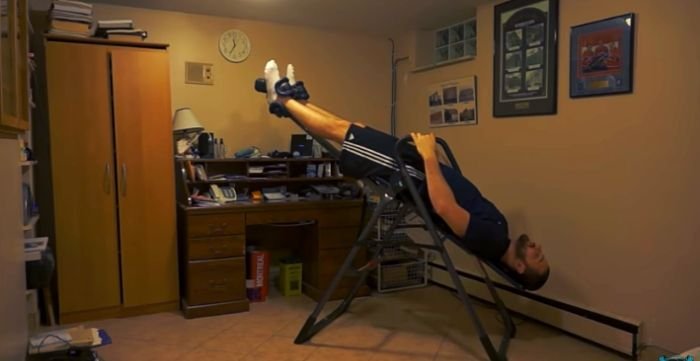
If your table is balanced correctly, the pivot point should sit roughly at your midriff. Raise one arm overhead and slowly lean back, letting the table invert away from your feet at a controlled pace. Never jerk into position. This is also the technique used for those trying a Body Power inversion table or a similar home model.
Stop once you reach your set angle, relax your shoulders, and let your spine stretch naturally. Hold the position for about two minutes on your first few sessions.
5. Return Upright Slowly
When you’re ready to come back up, use your abdominal muscles or the table’s handles to guide yourself upright rather than dropping suddenly. A fast return can cause dizziness, especially in your first few sessions.
Watch a physical therapist walk through the full setup and inversion process below.
How Long and How Often Should You Invert?
Start small. On your first sessions, invert for just one to two minutes at a shallow angle of 20 to 30 degrees, once a day. As your body adjusts over one to two weeks, you can gradually work up to 60 degrees for herniated disc relief specifically, holding for up to five minutes at a time.
There’s no strong evidence that longer or more frequent sessions produce better results, and overdoing it raises your risk of soreness or dizziness. Two short sessions a day, spread out and done consistently over several weeks, tends to be a more realistic approach than one long session.
Always keep a spotter nearby for your first few sessions in case you have trouble returning upright.
Keep a simple log of the angle, duration, and how your back feels afterward for the first couple of weeks. That record makes it much easier to spot whether inversion is actually helping before you decide to keep it in your routine long term.
Conditions Inversion Therapy May Help With
Beyond herniated discs, people also use inversion therapy for relief from:
- Lower back pain
- Chronic back pain
- Muscle spasms
- Sciatica
- Degenerative disc disease
Who Should Avoid Inversion Therapy
Inversion therapy isn’t suitable for everyone. Hanging upside down raises blood pressure and pressure inside the skull, which Cleveland Clinic notes can be risky or even dangerous for certain people. Talk to your doctor before trying an inversion table if you have, or are at high risk for, any of the following:
- High blood pressure or heart disease
- Glaucoma or other eye conditions
- A history of stroke
- Spinal fractures, severe osteoporosis, or recent spinal surgery
- Hip or knee problems that make the ankle clasps unsafe
- Pregnancy
- Hiatal or inguinal hernia
Being aggressive or moving too fast can worsen a herniated disc rather than relieve it. Keep the following in mind:
- Get medical clearance before your first session.
- Keep sessions short and spread them out over weeks, not days.
- Limit your angle to around 60 degrees for herniated disc relief.
- Stay at 20 to 30 degrees during your first one to two weeks.
- Progress slowly and let your body adjust.
Listen to your body throughout. An inversion table should offer relief, not add to your pain.
Combining Inversion Therapy With Other Treatments
Most clinicians recommend treating inversion therapy as one part of a broader plan rather than a fix on its own. Pairing it with physical therapy, targeted exercise, or supportive gear tends to produce more consistent results than inversion alone.
If your back pain also flares up during the day at a desk or in the car, a well-fitted back support brace can help in the hours between inversion sessions. If your discomfort centers on your neck instead, the setup differs slightly, covered in our guide on using an inversion table for neck pain.
When to See a Doctor
Stop inverting and check in with a doctor if you notice worsening numbness, new weakness in your arms or legs, loss of bladder or bowel control, or pain that gets sharply worse rather than better. These can be signs of significant nerve compression that needs prompt medical evaluation, not more inversion.
Frequently Asked Questions
Is it safe to use an inversion table every day?
For most healthy adults who’ve been cleared by a doctor, short daily sessions of a few minutes are generally considered reasonable. Pay attention to how you feel afterward, and scale back if you notice increased soreness or dizziness.
What angle is best for a herniated disc?
Many people find 60 degrees effective for herniated disc relief, but that’s only after building up gradually from a starting point of 20 to 30 degrees over one to two weeks.
How soon will I feel relief?
Some people notice their pain start to ease within about 10 seconds of inverting, though lasting relief from a herniated disc typically takes consistent use over several weeks, not a single session.
Can I use an inversion table without a spotter?
Once you’re familiar with your table and comfortable returning upright on your own, many people invert alone. For your first several sessions, though, having someone nearby is a sensible precaution in case you feel dizzy or the mechanism sticks.
Final Thoughts
If restrictive back pain from a herniated disc is disrupting your daily life, inversion therapy is worth discussing with your doctor as one option among several. The research so far is encouraging but limited, so treat it as a complement to other care, not a replacement for it. Used correctly, with a sensible angle and duration, learning how to use an inversion table for a herniated disc could become a useful part of your relief routine.

Hi, I’m Mamon, the content creator behind this blog. I share my experience in blogging, WordPress, SEO, and affiliate marketing through honest product reviews, in-depth buying guides, and practical how-to articles. Every piece of content is thoroughly researched and written to help readers make informed decisions.
Leave a Reply